Tuesday, 12 March 2013

Wat Phraphutthachaay, Buddha's shadow and the discovery of his Right footprint, monkey mountain


Not so far from Wat Phraphutthabaat, situated the Wat Phraphutthachaay temple. This temple was known for the shadow of the Buddha's body.It was told that long time ago, when Buddha visited this area and gave the teaching to one hunter. Before he left, the hunter asked him to leave something as the respected memorial. Then the Buddha gave the miracle by showing his shadow shine on the mountain's wall.

The miracle Buddha's shadow was found about 400 years ago. Due to the storms and wars, the Wat Phraputthachaay temple was left abandoned for a long long time. Recently, it has been decided to renovate this temple once again.


One great discovery about this temple is that recently, about 20 years ago, when the fine art institution was trying to renovate the sanctuary, shrines and temple. They moved the mock Buddha footprint altar away from the original spot. After the move and cracked the cements, they discovered the original shape of Buddha's right footprint under the crack. 


Around the Wat Phraphutthachaay, located Khao Lom or Lom mountain. Around Lom mountain, there are lots of living creature such as monkey walking and running everywhere. They are wild monkey.
There was one corn seller. So we bought corn and fed these monkeys.


The monkeys are everywhere around the temple area and the stair.


On top of the hill, one layer down, there was a small pond where monkeys usually 
come here to play and bath.


Wat Phraputthachaay and Wat phraputthabaat are located in the same province. The trip lasts for a day. It is a great combination trip for anyone who is interested in Thai-Chinese way of living, Thai-Chinese temple, Buddhism history, miracle and enjoy the monkey feeding. If you are interested in this tour, contact info@thailandsecrettour.com or www.thailandsecrettour.com


Famous temple among the Chinese on Chinese new Year : Cave Shrine in Saraburee

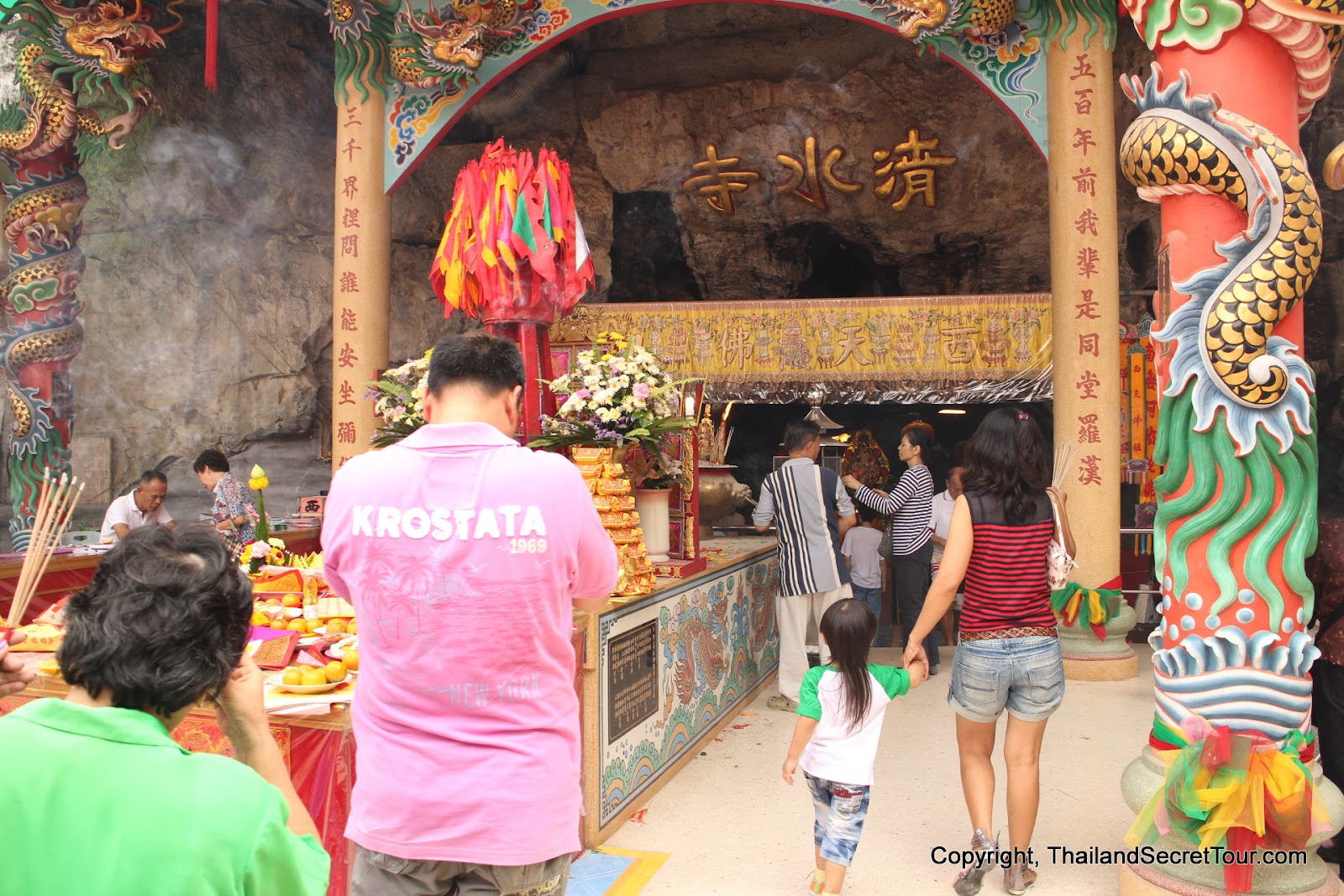
Driving a bit further from Wat Phraputthabat, we arrived to "Rong Jee tham Pratun", directly translated to English as "Vegetarian cafeteria Pratun cave". At this cave, situated the Tiger god shrine. The shrine is located inside the cave and the vegetarian cafeteria is located in the front beside the shrine.
 From the picture, the entrance of the cave.

This shrine also sell one of the best tea I have ever tasted. It is the shrine's own herbal tea recipe. There are tea tank all over the place offer to the visitors. You can choose either hot/cold tea. If you like, you can also buy the pack of tea back home. 


Inside the cave, there are several small shrines situated all over the cave spots.


Another spot, there is the pagoda, built during the King Rama the fourth. Inside the temple, there is also the holy water which people usually take some and pour it on their head, or wash their face for their good luck.

Not only it is the shrine, this place is also the old people house. Every Chinese New year, they will come out sit on the chairs and wait for the kind minded people to donate some money to them.


Interested in a day trip tour, please contact info@thailandsecrettour.com or www.thailandsecrettour.com

Famous temple among the Chinese on Chinese New Year : Wat Phraphutthabaaat


During the Chinese new year, we visited one of the most popular temple among Thai-Chinese people in Thailand. This temple is called " Wat Phraputthabaat". Every year during the Chinese new year, my family and I always visit this temple. When we arrived, the first thing we did was to eat!

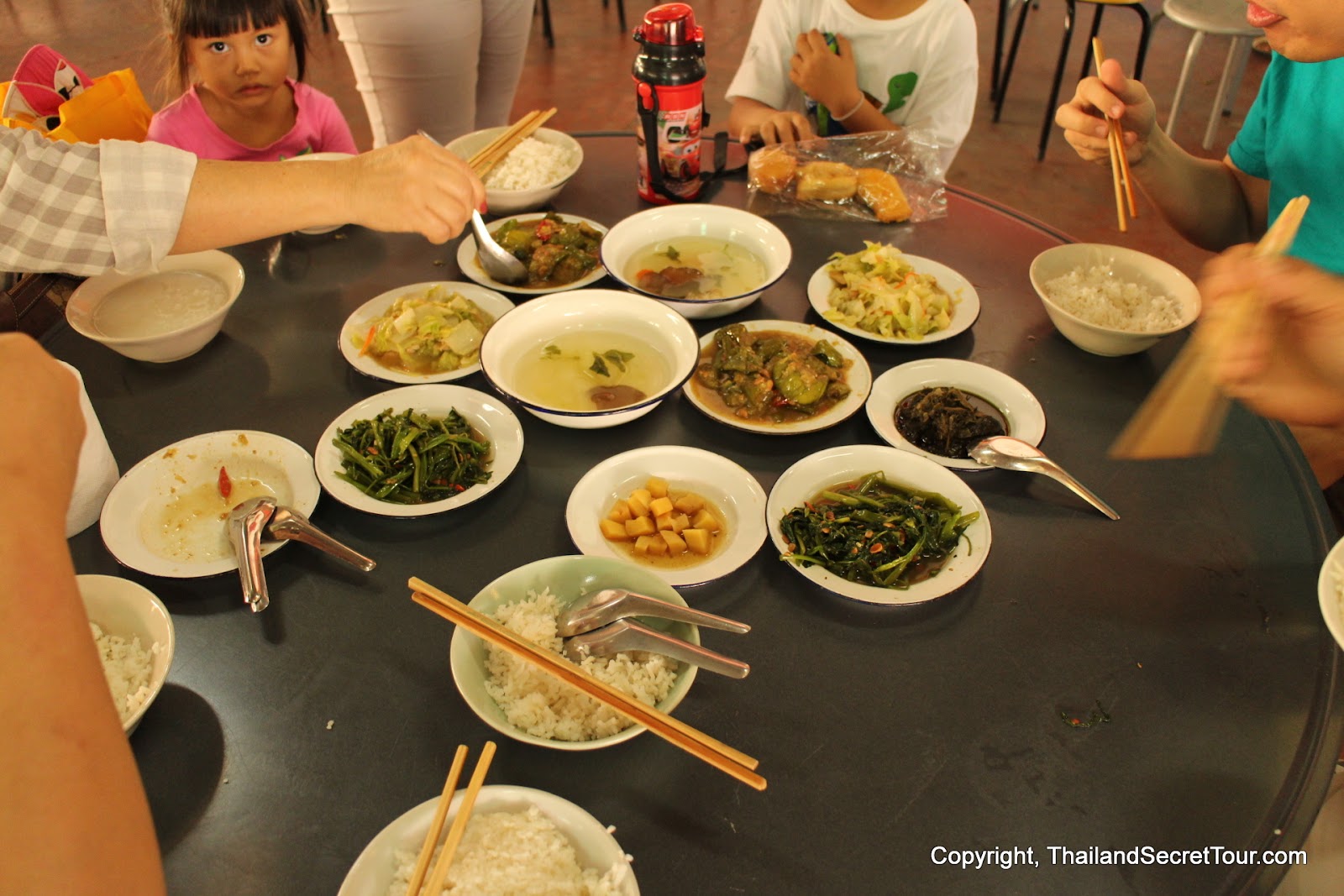
Around the Wat Phraputthabaat temple, there are several vegeterian cafeterias which offer vegetarian foods to the visitors for free. Of course, you can have them for free but usually, people rather donate some money for rice and other foods after the meal. The cafeteria in the picture below was called " Lao-je-tuo" which refers to old vegetarian cafeteria. 


The vegetarian meal we had once we arrived to Wat Phraputthabaat temple. On the table, it consisted of fried morning glory, prickles, fried eggplant, fried cabbage, and soup and steam rice and congee.


After finishing the meal, then we continued to pray to each shrines. Thai Chinese people believed that if you come to visit Wat Phraputthabaat every year, you and your whole family will be blessed for the whole year. 


After you finished praying at one shrine, then it is important to hit the temple drum 3 times. We believe that hitting the drum 3 times will bring us luck.


Outside the shrines, there are also the area where you can make merits and donations. From the picture, it is the day of birth oil lamp donation. For example, if you born on Monday, you donate some money in exchange with bottle of oil and then you pour the oil around the lamp of your day which defined by the position of the Buddha statue. During the pour, you can pray, wish or ask to be blessed. Usually people ask and wish for the happiness, luck, health, wealth.


 During the Chinese new year, lots of golden paper were fold and stacked up like piles of gold. They were ready to be burnt! Chinese people believe that burning the golden paper gold is a way to send the money to their dead ancestors to spend in the heaven.

After we finished praying at one side of the temple, we crossed the street, to pray at another side of the temple. This temple situated, the new vegetarian cafeteria. In Thai-Chinese, eating vegetarian is called "Kin-Jee" , Kin means to eat and Jee means vegetarian.


In the old days, the road transportation was not that convenient like nowadays. Therefore, it took nearly a day from Bangkok to Wat Phraputthabaat. If you left from Bangkok in the morning, you then arrived in the late evening. That's why, there are many free dormitory available for the visitors. The picture below showed the old dormitory. Nowadays, it is still functioning.

Then we crossed to another side of the road to visit the main sanctuary where , according to the belief of Thai people, the Buddha footprint was situated here. According to the history during Ayutthaya, one Thai monk who that time traveled to India, learnt from the Indian monk that there were 5 places where the Buddha footprints were situated and one of the 5 places was in Thailand. Once the Thai monk knew about this. He hurried to tell to the king. According to the old map, the Buddha footprint was located in the 
"Suwan banphot" mountain. 

After searching for a long time, they found the big Buddha footprint situated on this mountain. Since then, the king ordered to built the temple and the sanctuary to protect the Buddha footprint.

From the picture, at the entrance to the Buddha footprint sanctuary.


The big Buddha footprint, has been covered by gold leaves for many hundred years.

 Around the Wat Phraputthabaat, there are rows of hanging bells. People usually use the wooden stick to hit on every bell for their luck and blessing.


 Around the temple, there is a local market which usually sell grains, rice, deep fried banana, deep fried taro, garlics, red onions. If you are looking to buy herbs, grains, rice. This is one of the source and cheapest place to buy.


A day visit to Wat phraputthabaat temple is very interesting for culture, history and Buddhism. You see a way of living of Thai-Chinese people. If you are interested in this tour, book the tour with us. Contact info@thailandsecrettour.com , www.thailandsecrettour.com

Saturday, 23 February 2013

Fishermen Village, Samutsakhon, Near Bangkok


This was a second time we surveyed the route for the Fishermen Community Tour. We took the train from Baan Laem to Mae Klong (Traing market). On the way, we saw the salt farm field. 


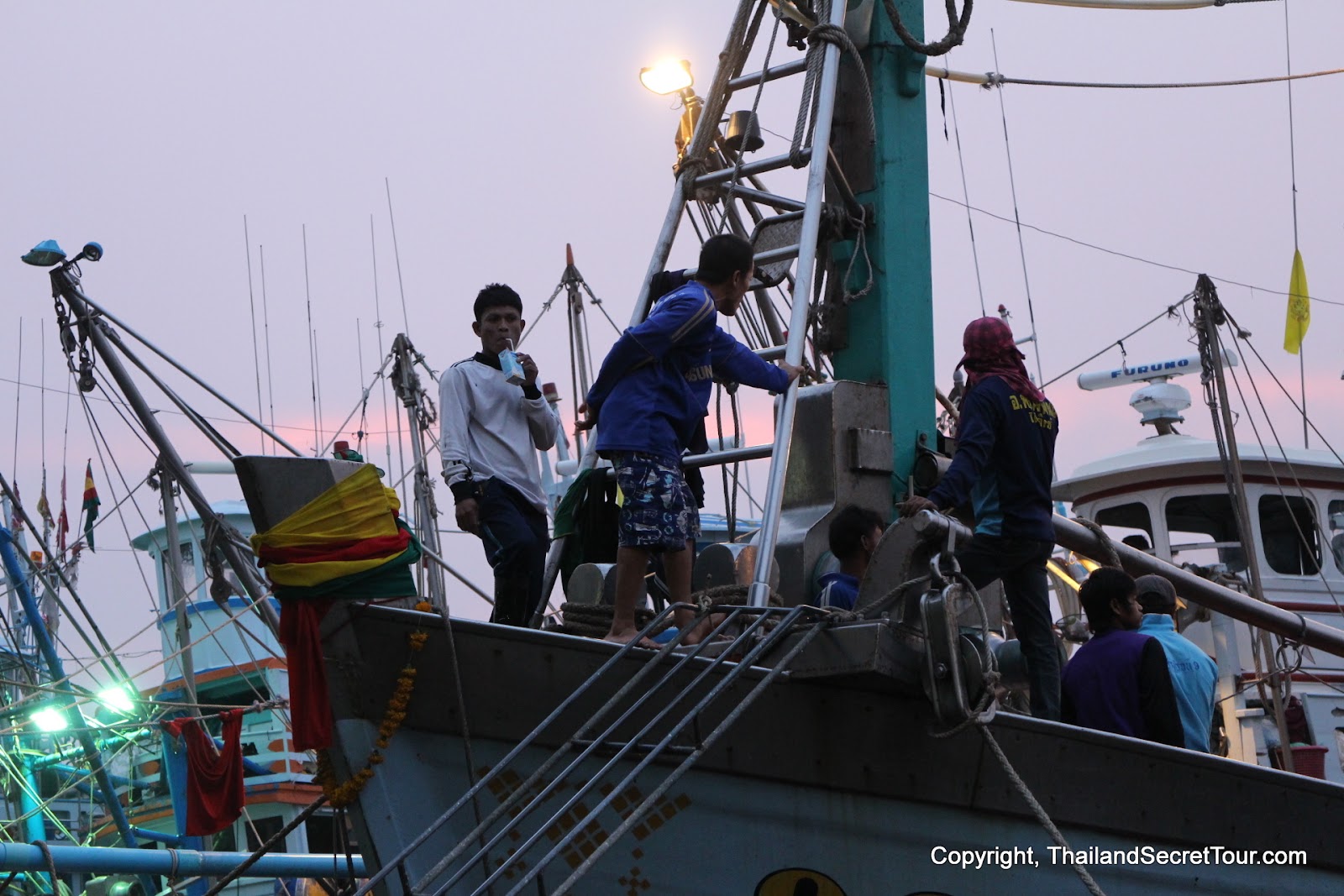
We were eager to see how the fishermen worked. At Mahaachai port (Samut sakhorn province), or for Thai people we called it Saphaan -pla (Fish Bridge). It was 5 AM. in the morning that the fishing boat, arrived to the port. Fishermen laid down the small iron bridge. Later, they slided the fish baskets down from the boat.


Inside the basket, the mackerel fish was contained. Thai Gulf Bay is the source of these mackerel fish.

 The mackerel fish is used in many of Thai dishes. The famous one is called "Naam Prik Plaa Thuu". It is the mackerel with Kapi chilli paste. From the picture, the fishermen sorted the fish's size.


Another Fish port, Amphawan. We have got the permission to go inside and take a picture of the fish port and the activities around the port. The fishing boat here came with the bigger size. From the picture, fishermen were helping each other to spread the trawl in order to remove the fish.


The method of loading the fish to the port is the same. The iron bridge and the fish basket!


Later of that morning, we continued to the Fishermen community at Bang kra chaw village, Samut Sakhorn.
The picture showed the mangrove forest. People in this village, lived their lives based on the fishing, searching for clam shells, oyster, angel's wing, small crabs, 

From the picture, a villager show us the fishing tool.


She introduced us to the mangrove forest nearby. The nature is 100%. In this mangrove, you can see, crab, clamshells, and mudskippers or in Thai we called it "Plaa-Tiin" which means the fish with legs.


An activity of the Fishermen villager is to fix the boat and paint.


Later on we walked deeper to the village. We found one big shrine. We learnt that this shrine is called " Pae-Kong Shrine" The villagers believed that the Pe-Kong god, protects them from the harm and dangers when they go out to the sea. We were highly requested to visit and pay the respect to the Pe-Kong god, before we could enter their village.

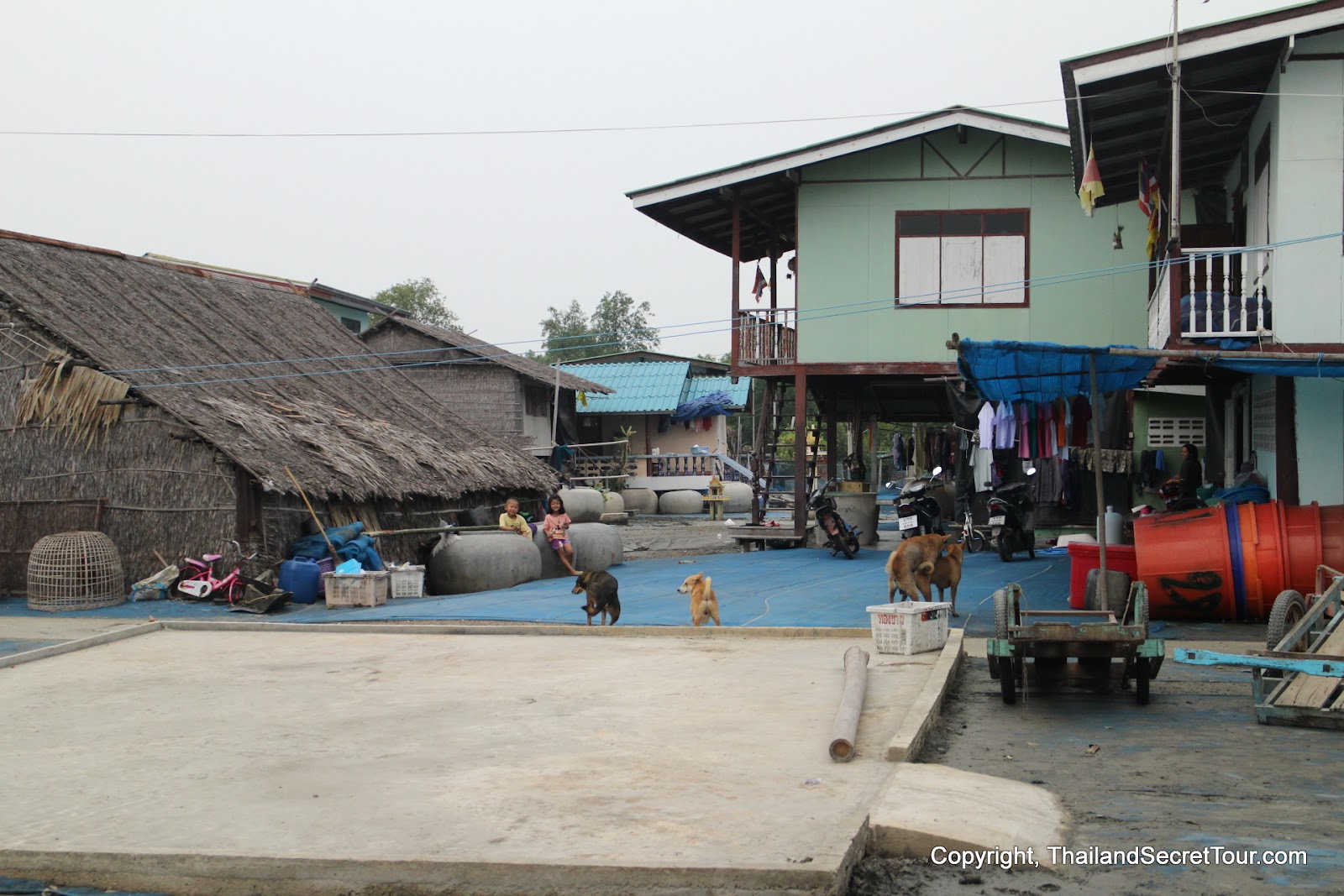
Inside the village, we saw that the ground was almost everywhere covered with the big blue net. We were told that it was for drying the Koey Shrimp. A main ingredient for Thai Shrimp Paste.
Also it is easier to walk on this blue net. The floor can be slippery ,muddy and rocky. So the villager thought that if they covered the ground everywhere with these net. It was 2 ways benefit.


The view of the village, some live in the wooden house and some live in side the hay hut! 
To us, this was very exotic!


An old lady has been living in this village for all her life. She earned her living by searching for the oysters, and opening the shell, cleaning them and then selling them to the small retailer.


When we continued exploring this village, we met a lady who was knitting the trawl for the fishing boat. The pile of the trawl you see in the picture is purely handmade. 

We passed another house, this house sells dried fish. Thai people used dried fish in many Thai dishes.


This Fishermen village, is completely unknown by the tourists nor the local. I was so excited when I found them. This was really the first I visited the fishermen village that are still raw and non tourist attraction and truly off the beaten paths.

If you are interested in this tour, please visit www.thailandsecrettour.com or 
email us info@thailandsecrettour.com